
Freehold NJ Pool Leak Case Study: Four Inches of Water Lost in One Hour, but the Pool Was Not Leaking
Case Summary:A homeowner in Freehold, NJ experienced sudden, extreme water loss shortly after the pool had been serviced. The pool company referred her to a diver, who patched a suspected hole and applied epoxy inside the skimmer, but neither repair affected the water loss. After the problem continued, the homeowner contacted Atlantic Pool Leak Detection. Due to the severity of the water loss, APLD treated the situation as an emergency and arrived within 24 hours. Within ten minutes of being on-site, we identified that the water loss was not caused by an actual pool leak. An open backwash valve was allowing the pool pump to send water out through the backwash line and into the rear of the property, where it was not visible from the pool area. Neither the pool service company nor the diver noticed the open backwash valve. The homeowner spent four frustrating days and $895 in service charges before the actual cause of the water loss was identified.
Why Water Loss While the Pump Is Running Matters
Water loss that occurs only, or becomes significantly worse, while the pump is running often points toward a broken pressure-side plumbing line or an equipment-related problem. Water can also be pumped out through an open or malfunctioning backwash valve, making it appear that the pool is leaking when it does not have an actual leak. In this case, the pump-on water loss was an important diagnostic clue that should have been considered by everyone who previously evaluated the pool. It should have directed their attention toward the plumbing, equipment and valve positions.
Similar Symptoms Can Have Different Causes
In another recent vinyl liner pool leak detection job, the pool held water while the pump was off but lost approximately ten inches overnight while running. The Aqua Genie return was suspected by the customer’s pool service company, but it held pressure when APLD pressure tested it. The issue was a bad multiport valve that was sending water through the backwash line while set to Filter.
The Freehold pool had an open backwash valve; the other pool had a malfunctioning multiport valve. Both produced severe pump-on water loss, showing why the equipment, valve positions and backwash line should be checked whenever water loss occurs only, or becomes substantially worse, while the pump is running.
Why We Made Room for an Emergency Visit
Losing four inches of water during one hour of pump operation meant the customer could not safely continue running the pool. We were scheduling appointments approximately 10–12 days out, but the water loss was too severe to leave unresolved for that long. We juggled our schedule and went to the customer’s home on the very next day.
The Finding: The Pool Was Pumping Water Into the Yard
Within approximately ten minutes of arriving, we identified the cause. A valve used when backwashing the filter had been left open. Whenever the pool pump ran, water was sent through the backwash line and into the rear of the property, out of sight from the pool area.
Water pouring from the pool’s backwash line into the rear of the property while the pump was running.
We brought the homeowner to the rear of the property and showed her where the water was going. After closing the valve, we labeled the backwash plumbing and marked the correct valve position so she could understand what had happened and recognize the proper setting in the future.
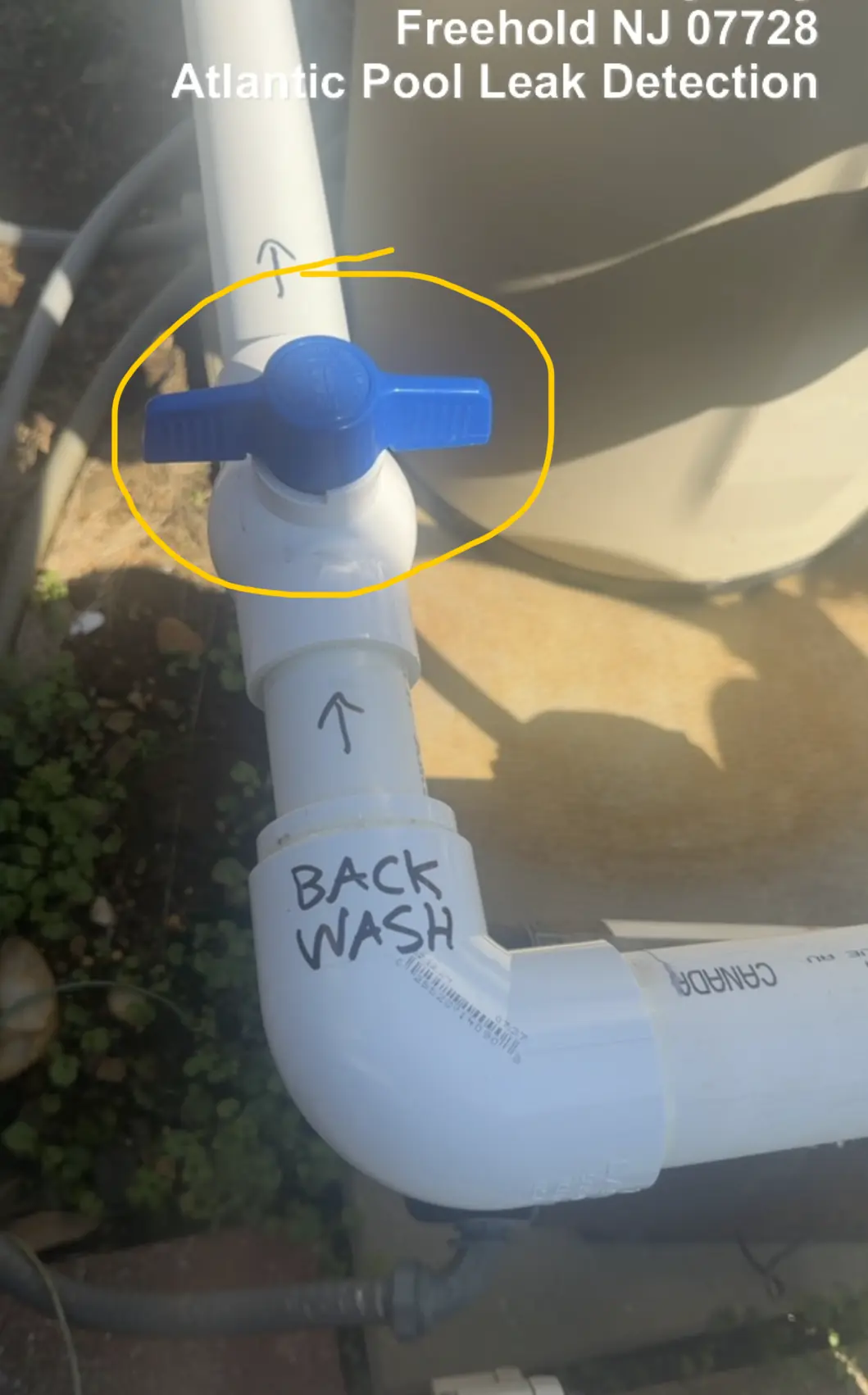
This was not a leak in the liner, skimmer or underground pool plumbing. It was an open-valve problem that caused severe water loss only while the pump was running.
Could the Pool Service Company Have Left the Valve Open?
The pool had been serviced shortly before the sudden water loss began, so it is possible that the valve was opened during that visit and accidentally left open. However, APLD did not witness who opened the valve and cannot determine with certainty when or by whom it was left open.
What can be stated with certainty is that the valve was open when APLD arrived, water was being pumped into the rear of the property, and closing the valve stopped the rapid water loss.
The Result
APLD identified the cause of the severe water loss within approximately ten minutes and showed the homeowner exactly where the pool water was going. Closing the open backwash valve stopped the problem. No pool leak repair was needed.
From Tuesday through Friday, the homeowner paid almost $1000 in service charges. She also incurred the cost of replacing a substantial amount of pool water.
What This Freehold Case Shows
- Rapid water loss does not always mean the pool has a structural or plumbing leak.
- Water loss that occurs only, or becomes much worse, while the pump is running should direct attention toward the plumbing, equipment and valve positions.
- An open backwash valve can allow the pool pump to remove large amounts of water out of the pool.
- Finding a suspicious area does not prove that it is responsible for the reported water loss.
- The effect of a repair should be verified before assuming the problem has been resolved.
Pool Leak Detection in Freehold, NJ
Atlantic Pool Leak Detection provides professional pool leak detection throughout Freehold and Monmouth County. We evaluate in-ground gunite, vinyl liner and fiberglass pools and can test the pool structure, fittings, equipment and individual plumbing lines as needed to identify the source of water loss.
Contact APLD or call 732-333-3304 to request an appointment in Freehold, NJ.
You can also learn more about our Freehold pool leak detection services, view our Monmouth County service area, or review additional pool leak case studies.
Frequently Asked Questions
Can a Pool Lose Water Rapidly Without Having a Leak?
Yes. An equipment or valve problem can cause rapid water loss even when the pool structure and plumbing are not leaking. In this Freehold case, an open backwash valve allowed the pump to send water into the rear of the property.
Why Did the Pool Lose Water Only When the Pump Was Running?
The pump was moving water through the open backwash line. When the pump was off, it was no longer actively moving water out of the pool. That pattern helped explain the unusually rapid water loss.
Can an Open Backwash Valve Drain a Pool?
Yes. Depending on the plumbing configuration and how long the pump operates, an open backwash valve can remove a substantial amount of water from a pool. The pump should be turned off until the cause of severe water loss is understood.
Who Left the Backwash Valve Open?
APLD could not determine who opened the valve. The pool had been serviced shortly before the sudden water loss began, so it is possible that the valve was left open during that visit, but that cannot be confirmed.
Do You Provide Pool Leak Detection Throughout Freehold Township?
Yes. APLD provides residential in-ground pool leak detection throughout Freehold Township, Freehold Borough and surrounding Monmouth County communities.