
Atlantic Pool Leak Detection provides complete swimming pool leak detection in Freehold Township, New Jersey. We evaluate the pool structure and individual plumbing lines to determine where water is escaping before repair work or excavation begins.
Depending on the symptoms, our testing may include underwater inspection, dye testing, pressure testing and electronic or acoustic leak locating. When an underground line is leaking, pressure testing can confirm the failed line and sounding equipment can help narrow the break to a targeted area beneath a patio or yard.
Atlantic is a father-and-son company operated by Randy and Ryan Racioppi. With more than 15 years of pool leak detection experience and thousands of pool leaks located, this specialized work is our primary service throughout Freehold Township, Monmouth County and surrounding New Jersey communities.
A Real Freehold Township Leak: One Broken Return Line-and a Second Hidden Problem
A new Freehold Township homeowner contacted Atlantic because their vinyl liner pool was losing approximately 1–1.5 inches of water per day. None of the plumbing at the pool equipment was labeled, and the lines did not have valves that allowed the us or the homeowner to identify or isolate each return.
We pressure-tested the pool plumbing and confirmed that a return line was leaking. We then used sounding and acoustic equipment to pinpoint the underground break beneath the concrete pool patio.
To reach the damaged pipe, we carefully cut and removed a section of the existing concrete. After repairing the broken return-line connection, we reset the same section of concrete rather than pouring a new patch that would visibly differ from the rest of the patio. Once the work was complete, it was difficult to tell where the patio had even been opened.
The pool continued losing water after the underground repair, which showed that the broken return line had not been the only problem. Because the plumbing by the pool equipment was unlabeled and could not be individually isolated, the new homeowner did not know that one pool-wall return was connected to a dead underground line and should have remained plugged because it was broken.
Following some continued testing, the homeowner plugged the unused return fitting. The pool then stopped losing water, confirming that the unplugged, abandoned line had been the remaining source.
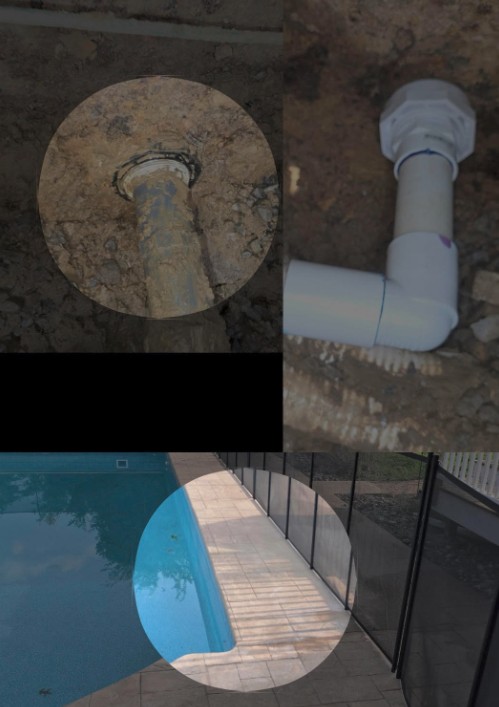
What This Freehold Case Demonstrates
- Pressure testing and pinpointing answer different questions: which line is leaking and where the underground break is located.
- A successful repair does not prove that every source of water loss has been eliminated. Continued loss requires continued diagnosis.
- Unlabeled plumbing and abandoned lines can confuse a homeowner and create leaks when fittings that should remain sealed are left open.
- Targeted excavation and careful restoration can reduce the visible impact of an underground pool-plumbing repair.
Four Inches of Water Lost in One Hour, but No Pool Leak
A Freehold homeowner contacted Atlantic Pool Leak Detection after the pool lost approximately four inches of water during only one hour of pump operation. Within approximately ten minutes of arriving, APLD found an open backwash valve that was sending pool water into the rear of the property. Closing the valve stopped the rapid water loss. The pool did not have an actual leak.
Read the complete Freehold pool water-loss case study.
Confirm the Line Before Opening the Patio
An underground pool pipe should not be excavated based only on a wet area, assumption or general noise. Digging or excavating blindly can be a huge waste of time and money and is very invasive. We isolate and pressure-tests individual plumbing lines when the system allows. A failed pressure test confirms which line is compromised. Electronic or acoustic locating is then used to help narrow the underground break area.
This sequence matters because repairing or replacing the wrong pipe can leave the original leak unresolved. Site conditions, pipe depth, surrounding materials and access can affect how precisely a broken pipe can be pinpointed.
Learn more about pool plumbing pressure testing and underground pool plumbing leak locating.
When the Pool Still Leaks After a Repair
A pool can have more than one leak at the same time. One failed plumbing line may be real and correctly repaired while a second structural opening, fitting or abandoned line continues to cause water loss. The correct response is to compare the post-repair result with the original water-loss pattern and determine what remains unexplained.
The Freehold case also shows why pipes being labeled and isolation valves matter. When several lines terminate at the equipment without identification or individual controls, a homeowner may have no reliable way to know which pool fittings are active, abandoned or intended to remain plugged.
How We Diagnose Pool Leaks in Freehold Township
- Review the water-loss pattern: We ask how quickly the pool is dropping, whether the loss changes with the equipment running and whether the water stops at a consistent level.
- Inspect accessible pool areas: Depending on the pool, we evaluate the liner or shell, skimmers, lights, fittings, steps and other potential underwater leak locations.
- Identify the plumbing layout: We determine which lines can be isolated and note unlabeled, shared or abandoned plumbing that may affect the investigation.
- Pressure-test individual lines: Each accessible line is tested separately when plumbing is suspected so a failed line can be confirmed before excavation.
- Pinpoint a confirmed break: Sounding, acoustic and electronic equipment may help narrow the damaged area beneath concrete, pavers, grass or other surfaces.
- Verify the result: After a repair or corrective action, the pool’s water level determines whether the active loss has stopped or whether another issue remains.
Pool Leaks We Locate in Freehold Township
- Vinyl liner holes, tears and fitting leaks
- Skimmer, light, step and wall-fitting leaks
- Return, skimmer, main-drain and cleaner-line failures
- Leaks associated with attached spas or water features
- Unused or abandoned plumbing lines that should remain sealed
- Multiple simultaneous structural and plumbing leaks
More Than Just a Pool Diver
A diver can inspect accessible areas inside a pool and locate many liner, fitting and structural leaks. A diver cannot visually inspect plumbing buried beneath a concrete patio. Atlantic combines underwater inspection with plumbing diagnostics, pressure testing and underground pinpointing when needed.
Compare pool-diving services with complete professional pool leak detection →
Why Freehold Township Homeowners Call Atlantic
- More than 15 years of pool leak detection experience
- Thousands of pool leaks located
- Pool leak detection as our primary specialty
- Individual plumbing-line pressure testing when appropriate
- Sounding, acoustic and electronic underground locating equipment
- Targeted underground repairs with careful surface restoration when conditions allow
- Father-and-son service performed by Randy and Ryan
- More than 175 five-star Google reviews from New Jersey customers
Read customer feedback on Atlantic’s reviews page.
Frequently Asked Questions About Pool Leak Detection in Freehold Township
Can a pool have more than one leak?
Yes. A pool may have multiple plumbing failures, more than one structural leak or a combination of both. A confirmed repair should be followed by water-level monitoring to verify that the complete loss has stopped.
What is the difference between pressure testing and pinpointing?
Pressure testing helps confirm which plumbing line is compromised. Pinpointing uses electronic or acoustic equipment to narrow where the underground break is located. A line should generally be confirmed before the surrounding surface is opened.
Can you locate a broken pipe beneath concrete?
In many cases, yes. Site conditions can affect precision, but specialized locating equipment may narrow the damaged area so excavation can be targeted rather than opening a large section of patio.
Will the concrete patio have to be replaced?
Access depends on the break location and patio condition. In this Freehold case, Atlantic removed a section of the existing concrete and reset that same section after the pipe repair. Not every slab can be removed or restored the same way, and results vary by property.
Why do pool return fittings and plumbing connections break?
Pool return fittings and plumbing connections can fail for several reasons. Stress or pressure on the pipe is a common cause, but age, movement, installation conditions, improper winterization, shifting soil or freeze damage may also contribute. The cause should not be assumed from water loss alone; the plumbing line must be tested and the failed area exposed when the repair is performed.
Why did the unused return in this Freehold pool need to remain plugged?
That return jet was connected to a dead/broken underground line and not to the pool equipment. Because the line was not in use, the pool-side return needed to remain securely plugged. The new homeowner did not know this because the equipment plumbing was unlabeled and the return lines could not be individually isolated.
Do I need to drain the pool before testing?
No. The pool should normally be filled to its regular operating level so underwater inspection, dye testing and water-loss comparisons can be performed.
How long does pool leak detection take?
Many residential appointments take approximately one to two hours. Multiple plumbing lines, attached features or evidence of more than one leak may require additional time or follow-up testing.
Do you serve all of Freehold Township?
Yes. Atlantic provides residential in-ground pool leak detection throughout Freehold Township and nearby Monmouth County communities. Appointment availability varies by season.
Schedule Pool Leak Detection in Freehold Township
If your pool is consistently losing water, determine which part of the pool is leaking before authorizing excavation or replacement of an underground line.
Contact Atlantic Pool Leak Detection to request an appointment in Freehold Township, NJ, or call 732-333-3304.
When contacting us, include the approximate daily loss, whether the equipment plumbing is labeled, whether individual lines can be isolated and any prior testing or repairs.
Pool Leak Detection Throughout Monmouth County
Atlantic serves Freehold Township and surrounding Monmouth County communities. Learn more on our Monmouth County pool leak detection page.



