
A pool can lose water through the pool structure or underwater components, or through the underground plumbing. Underwater testing can identify leaks in a liner, pool shell, skimmer, light, drain or fitting, but diving alone cannot reliably determine whether a buried plumbing line is leaking.
Atlantic Pool Leak Detection can evaluate both sides of the system. Depending on the pool and the reported symptoms, a complete diagnosis may include underwater testing, individual plumbing-line pressure testing and specialized equipment used to pinpoint an underground pipe break.
That distinction matters. If only the inside of the pool is checked and the leak is actually in an underground pipe, the homeowner may pay for an incomplete service and still have a leaking pool.
A Pool Can Leak From Two Different Places
Most pool leaks fall into two categories:
- Leaks in the pool itself, including the vinyl liner, gunite or fiberglass shell, skimmers, lights, drains, returns, steps, fittings and other underwater components.
- Leaks in underground plumbing lines, including skimmer, return, main-drain, cleaner, spa and other dedicated lines.
The symptoms can overlap. Fast water loss does not prove that the liner is torn or a pipe is broken. A wet area near the pool does not identify which buried pipe is leaking. Testing should be based on the pool’s configuration, the reported symptoms and the findings during the leak detection.
What Underwater Testing Can Find
Underwater testing is an important part of professional pool leak detection when the evidence points to the pool structure or submerged components. Depending on the pool, a trained technician may check:
- Holes, tears and seam separations in a vinyl liner
- Cracks or defects in a gunite, concrete or fiberglass pool shell
- Leaks around skimmers, return fittings, main drains, steps and other underwater penetrations
- Pool lights, light niches and conduits
APLD performs underwater testing and repairs when appropriate. The limitation is not scuba diving itself. The limitation is relying on diving as the entire leak detection when the underground plumbing has not been evaluated.
What Diving Alone Cannot Determine
A technician can check the visible areas inside the pool, but cannot see through the patio, soil or pool structure to evaluate a buried pipe. Diving alone cannot reliably determine:
- Whether an underground skimmer line is holding pressure
- Whether one return line is leaking while the other return lines are sound
- Whether a main drain or cleaner line is leaking
- Where a confirmed plumbing line leak is located underground
- Whether the plumbing can be ruled out before attention shifts to the pool structure
Determining whether an individual plumbing line is leaking requires individual plumbing-line pressure testing. When a line fails a pressure test, additional diagnostic work is required to locate the break.
That distinction is essential: pressure testing confirms whether a plumbing line is leaking; pinpointing determines where the break is located.
How APLD Tests Pool Plumbing for Leaks
When the plumbing must be evaluated, APLD tests each accessible line systematically. The exact process depends on the pool’s configuration, but testing may include:
- Identifying the accessible plumbing lines and understanding how the system is configured
- Isolating skimmer, return, main drain, cleaner or other dedicated lines individually
- Sealing each testable line with specialized test plugs
- Applying controlled air or water pressure appropriate for the system
- Monitoring each line to determine whether it holds pressure
- Verifying the result before recommending further diagnostic work or repair
Pressure testing answers the first question: Is this plumbing line leaking? It does not, by itself, identify the exact location of the break.
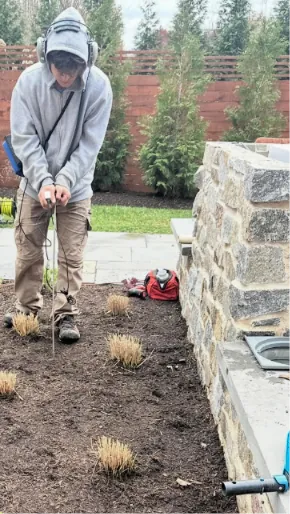
When a line fails and the leak must be located for repair, APLD may use specialized listening equipment and other diagnostic methods to pinpoint the underground pool plumbing leak. The objective is to narrow down the break before a patio is opened or any area is dug up.
Signs the Leak May Be in the Pool Plumbing
The following symptoms can point toward a plumbing problem, although none of them confirms the source by itself:
- The pool loses more water while the pump is running
- The pool loses more water while the pump is off
- Air repeatedly enters the pump or comes from the return jets
- The pump has difficulty maintaining prime
- A wet, soft or sunken area develops near the pool or equipment
- The water loss continues after an underwater repair
- A previous diver did not find a structural leak
A pump-on/pump-off test can provide useful diagnostic information before the appointment, but it cannot confirm the source of the leak.
Underwater Testing vs Complete Pool Leak Detection
The right service depends on what is actually being evaluated. The comparison chart below refers to underwater-only testing, not every company that employs a diver.
| Capability | Underwater Testing Only | Complete Pool Leak Detection |
|---|---|---|
| Checks the liner or pool shell | Yes | Yes |
| Checks submerged fittings and penetrations | Yes | Yes |
| Can include dye testing | Yes | Yes |
| Isolates individual plumbing lines | No | Yes |
| Confirms whether a buried line holds pressure | No | Yes |
| Identifies which plumbing line is leaking | No | Yes |
| Can pinpoint an underground pipe break | No | Yes, when conditions allow |
| Can evaluate both structural and plumbing sources | No | Yes |
Why Limited Testing Can Cost More
When the source of a pool leak is unknown, relying only on underwater testing can create an expensive sequence
- The pool’s underwater components are checked, but nothing is found to explain the water loss
- The water loss continues
- Another company then has to be hired to test the plumbing and pinpoint a break if necessary
- The customer pays twice before the source of the leak is identified
That does not mean every leaking pool requires both underwater testing and plumbing pressure testing. Testing should follow the symptoms and evidence. It does mean the company performing the leak detection should be capable of evaluating both the pool and its plumbing when necessary. If underwater testing does not identify the source, the leak detection should not end before the underground plumbing has been evaluated.
Before scheduling, review these questions to ask before hiring a pool leak detection company so you understand the company’s capabilities, pricing and follow-up policy.
Real Examples of How Limited Testing Cost Our Customers More
- In Farmingdale, NJ, a homeowner paid approximately $800 after a leak near the pool steps was suspected and epoxy was applied underwater. The pool continued losing water because three leaking plumbing lines had not been identified.
- In Morganville, NJ, a homeowner paid $650 for a diver who ruled out the new liner but did not identify the source of the water loss. The homeowner then paid another $400 to a pool service company for pressure testing. That company blamed and plugged the stair jets line, but the water loss continued. APLD later confirmed that the stair jets line was not leaking and identified the actual source: a broken waterfall line.
These cases demonstrate why performing an individual test is not enough. The results must be interpreted together by a company capable of evaluating both the pool and its plumbing to identify the actual source of the water loss.
Why Choose Atlantic Pool Leak Detection?
Pool leak detection is our specialty. We do not open or close pools, provide routine pool maintenance, renovate or build pools. Our work focuses exclusively on locating pool leaks and completing related repairs.
As a family-run company, Randy and Ryan bring more than 20 years of combined pool leak detection experience to every job. Depending on the pool and its symptoms, APLD can evaluate the pool structure, test underwater components, isolate and pressure test individual plumbing lines and use specialized equipment to pinpoint underground leaks.
You can also watch our pool leak detection videos to see real service footage showing leaks we have found, testing methods we use and repairs we have completed.
Schedule Complete Pool Leak Detection
If your pool is losing water and you do not know whether the leak is in the pool or its plumbing, call Atlantic Pool Leak Detection at 732-333-3304 in New Jersey or 718-532-4880 in Staten Island. You can also contact us online to request service.
Finding pool leaks is what we do.
Frequently Asked Questions
Can a Pool Diver Find an Underground Plumbing Leak?
Not by diving alone. A diver can check the pool structure and submerged components, but a buried plumbing line must be isolated and pressure tested to reliably determine whether it is leaking. If the line fails a pressure test, additional diagnostic methods are used to locate the underground break.
Does Every Pool Leak Detection Require Scuba Diving?
No. The testing should follow the pool configuration, reported symptoms and findings during the appointment. Some leaks can be diagnosed without diving, while others require an underwater examination or underwater access to isolate a plumbing line.
Does Every Pool Leak Detection Require Pressure Testing?
No. Pressure testing is used when the plumbing must be evaluated or ruled out. If a confirmed structural leak fully explains the reported water loss, additional plumbing testing may not be necessary.
Can Pressure Testing Tell Exactly Where a Pipe Is Broken?
Pressure testing confirms whether an isolated line is leaking. Locating the exact spot of the break requires a separate pinpointing process using specialized diagnostic equipment and experienced interpretation of the test results.
Can You Test Each Pool Plumbing Line Separately?
In many pools, accessible skimmer, return, cleaner and main drain lines can be isolated and tested individually. The lines that can be tested and the method used depend on the pool configuration, access and condition of the equipment.
What If Another Company Already Checked the Pool and It Is Still Leaking?
Ask exactly what was tested. If the prior service was limited to an underwater or visual examination, the underground plumbing may not have been evaluated. Provide APLD with the previous findings, repairs and any pump-on/pump-off water-loss observations so the next diagnostic steps can be planned efficiently.


