
Manalapan, NJ – Misleading Spa Symptoms and a Broken Skimmer Line
Case Summary: A Manalapan, NJ gunite pool with an attached spa was losing approximately 1 inch of water per day. Preliminary testing appeared to point toward the spa, but we identified two separate problems: valve assemblies allowing spa water to flow backward into the pool and a broken shallow-end skimmer line. The homeowner replaced the valve assemblies. We pinpointed the skimmer-line break, temporarily plugged the line to stop the water loss and returned a couple of weeks later to repair the broken pipe.
The Problem: Water Loss and Misleading Spa Symptoms
A homeowner in Manalapan, NJ, in Monmouth County contacted Atlantic Pool Leak Detection because their gunite pool with an attached spa was losing approximately 1 inch of water each day.
Before our visit, we worked with the homeowner through preliminary testing that included isolating the spa from the pool. When the spa water level dropped during that testing, it appeared that the spa itself might be responsible for the reported water loss.
However, a dropping spa level does not automatically mean the spa itself is leaking. In a connected pool/spa system, water can flow backward from the spa into the pool through shared plumbing if a valve does not close properly.
The Spa Was Not Leaking
We tested the spa and found no leak in the spa itself.
We suspected that the valves controlling the spa jets and spa drain were not sealing properly when closed. This could allow spa water to flow backward into the pool, making it appear that the spa was leaking.
We recommended replacing those valve assemblies. The homeowner replaced them himself, and within 24 hours the spa held its water level. This confirmed that water was flowing backward through the valves and caused the drop in the spa level.
But the pool continued losing water.
Correcting the spa valve problems did not resolve the pool’s water loss.
How We Tested the Manalapan Pool
Our continued testing identified a leaking shallow-end skimmer line.
Pressure testing confirmed the leaking line. Further testing was then needed to pinpoint where that line was broken under the concrete patio.
The valve problem explained the dropping spa level. The broken skimmer line explained the pool’s continuing water loss.
Pinpointing Before Opening the Patio
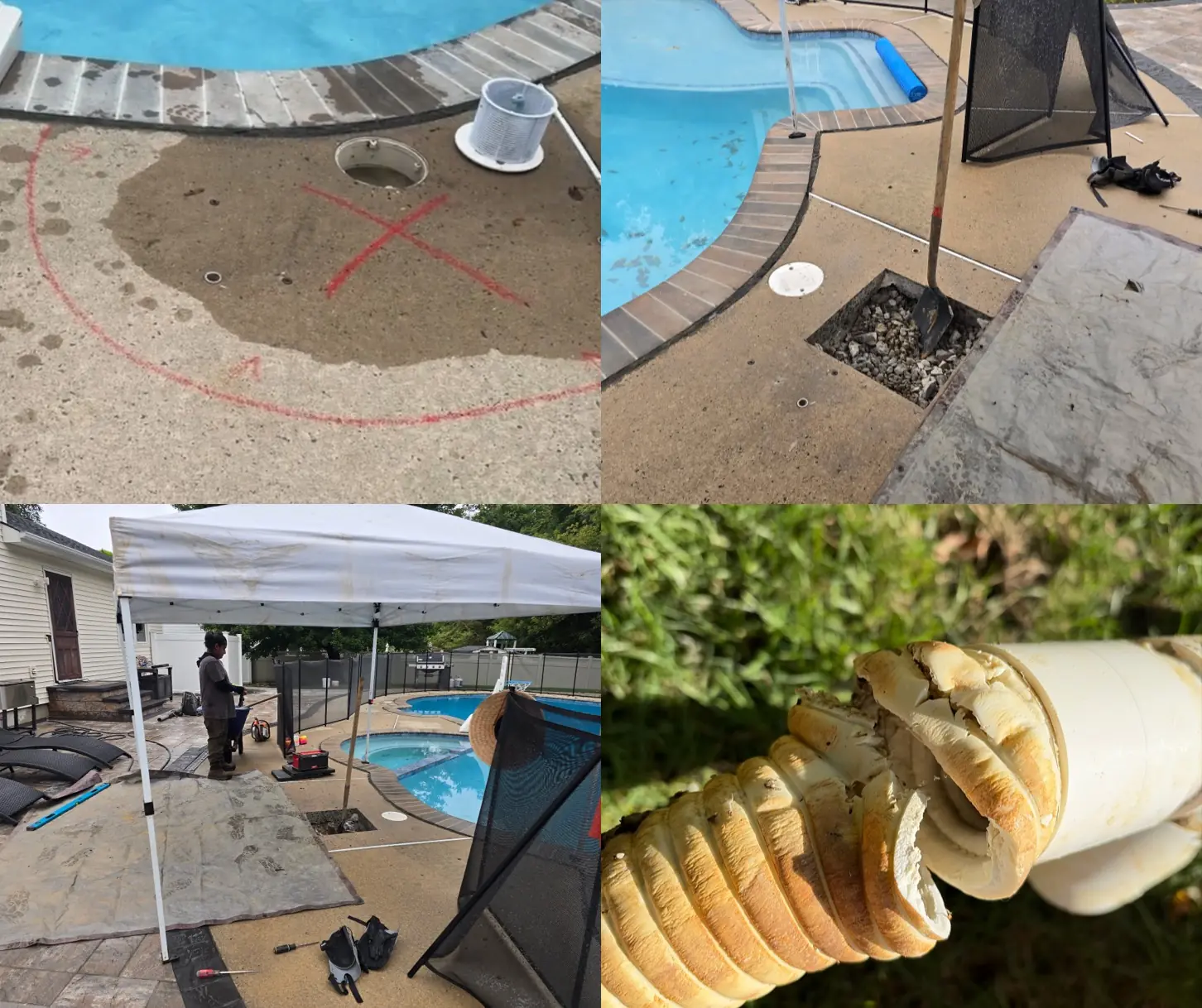
We pinpointed the underground skimmer-line break to a specific area beneath the concrete pool deck, near the edge of the patio.
Confirming that a line leaks and locating its underground break are separate steps. Pinpointing allowed us to determine where to open the patio instead of opening multiple areas to search for the broken pipe.
Temporarily Plugging the Line Stopped the Water Loss
We plugged the broken skimmer line and temporarily shut down that skimmer.
After the line was isolated, the pool stopped losing water.
This confirmed that the broken shallow-end skimmer line was responsible for the continuing pool leak. The temporary isolation stopped additional water loss while the permanent repair was scheduled.
Underground Skimmer Line Repair
A couple of weeks later, we returned and opened the area we had pinpointed along the concrete pool deck.
The broken shallow-end skimmer pipe was found exactly where we had marked it.
We removed the bad section of pipe, repaired the plumbing and pressure tested the line to confirm it was holding pressure. We then removed the temporary plug and turned the shallow-end skimmer back on.
The photos below show the marked location, patio opening, repair setup and damaged pipe.
The Result
This pool and spa had two separate problems:
- Valves that were not sealing properly allowed spa water to flow backward into the pool.
- A broken shallow-end skimmer line caused the pool’s continued water loss.
The homeowner’s valve replacement allowed the spa to hold its water level. Plugging the skimmer line stopped the pool’s water loss, and our later pipe repair allowed the shallow-end skimmer to be turned back on.
Because the break had been pinpointed beforehand, we did not need to open multiple sections of the concrete patio to find it.
What This Manalapan Case Shows
- A dropping spa level does not automatically mean the spa itself is leaking.
- Valve problems can allow water to flow backward from an attached spa into the pool.
- A pool and spa can have more than one problem at the same time.
- Correcting one issue does not prove that all water loss has been resolved.
- Pressure testing identifies the leaking line. Further testing pinpoints where it is broken underground.
- Pinpointing before digging can limit how much of the patio needs to be opened.
Need Pool Leak Detection in Manalapan, NJ?
APLD provides professional swimming pool leak detection in Manalapan and throughout Monmouth County. We test in-ground gunite, vinyl liner and fiberglass pools, including pools with attached spas and multiple plumbing systems.
Contact APLD or call 732-333-3304 to request an appointment in Manalapan, NJ.
Learn more about our Manalapan pool leak detection services, view our Monmouth County service area, or review additional pool leak case studies.
Frequently Asked Questions
Why Would an Attached Spa Lose Water Into the Pool?
If a valve in a connected pool/spa system does not seal properly, water may flow backward from the spa into the pool. A dropping spa level can have other causes, so testing is needed before assuming the spa itself is leaking.
Can a Pool Have More Than One Leak or Water-Loss Problem?
Yes. In this Manalapan case, valves allowed water to flow backward from the spa into the pool, while a separate broken skimmer line caused water to leak from the pool. Correcting the valve problem resolved the dropping spa water level issue, but did not stop the pool leak.
How Do You Determine Whether a Skimmer Line Is Leaking?
When possible, the skimmer line is isolated and pressure tested. Pressure testing confirms whether the line is leaking. Further testing can then help pinpoint where it is broken under the ground.
Can a Broken Skimmer Line Be Located Before the Concrete Patio Is Opened?
In many cases, yes. After identifying the leaking line, specialized equipment and testing methods can help pinpoint the break. Conditions vary by jobsite. At this Manalapan pool, we found the broken pipe exactly where we had marked it.
Why Did Plugging the Skimmer Line Stop the Pool From Losing Water?
Plugging and shutting down the broken line isolated it from the pool. When the water loss stopped, that confirmed the shallow-end skimmer line was solely responsible for the continued pool leak.
Does an Underground Pool Plumbing Repair Require a Separate Visit?
Underground repairs are scheduled separately from leak detection. Testing first identifies the leaking line and, when conditions allow, pinpoints the break. Then repairs can be scheduled for a different day.
Do You Provide Pool Leak Detection Throughout Manalapan Township?
Yes. APLD provides residential in-ground pool leak detection throughout Manalapan Township and throughout Monmouth County.